Steven Soderbergh’s King of the Hill is grotesquely underseen, a fantastic movie that feels like a unique anomaly in the filmmaker’s eclectic oeuvre.
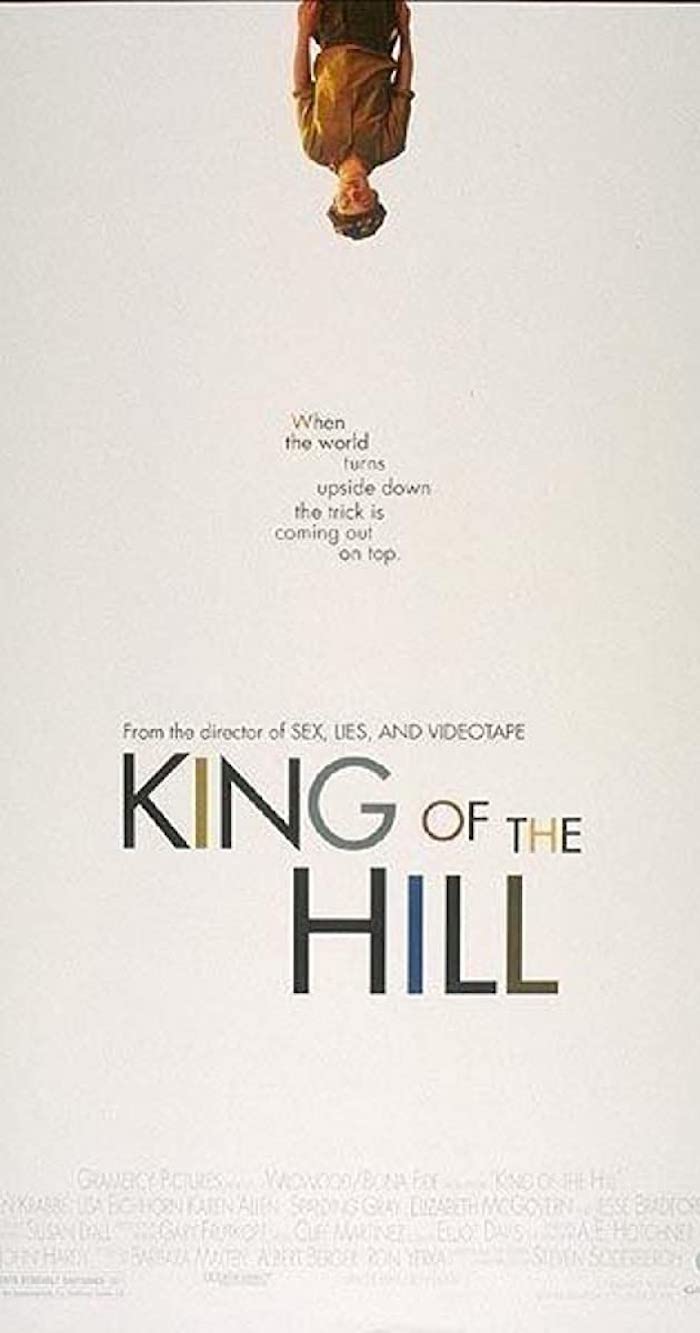
Released in 1993, Steven Soderbergh’s King of the Hill was the master’s third film, after the breakout success of the highly influential Sex, Lies, and Videotape in 1989, which was followed up in 1991 by the low profile, black and white oddity Kafka, which is better than its reputation suggests.
Still finding his voice as a filmmaker at the time, King of the Hill is a painterly, 1930’s set drama that looks at the harsh realities facing a family during the Great Depression.
The film would find warm critical embrace after a rocky Cannes Film Festival debut and was one of the first releases from Universal’s independent label Gramercy Pictures. King of the Hill flopped at the box office, grossing just over $1 million in the United States; I’m not even sure if an international theatrical release was attempted.
Featuring a cast of child actors and extremely talented character players rather than big Hollywood stars, the film was always going to face a struggle to get noticed, which is a shame, because this is the warmest, most emotional movie of Soderbergh’s career as a filmmaker.
I’ve long been fascinated with his lightning-quick turnaround in between projects, how he regularly shoots and edits his own features, and how he’s been able to swiftly move from genre to genre throughout the last 30 years, almost always with spectacular results.
He’s made experimental, form-pushing movies for himself, and has also been able to play at the top ranks of the studio system, delivering big box office hits when needed.
I’ve not seen a Soderbergh movie that I haven’t liked on some sort of level, and a few of them, most notably Schizopolis, Out of Sight, The Limey, Traffic, The Informant!, and Contagion, are films I feel to be four-star grand-slams, while his late-career run of Magic Mike, Haywire, and Side Effects were a total triple threat of genre skewering brilliance.
His work on the stunningly mounted Cinemax series The Knick was bold and convention-breaking, infusing period atmosphere (a turn of the century NYC hospital) with his modern camera style and anachronistic musical choices.
But it’s King of the Hill that feels so remarkably different for Soderbergh as a director, a movie that he made almost in response to his down and dirty indie cred that he had developed on his first two features, looking to expand his abilities and further confound his critics.
A young Jesse Bradford is Aaron, a 12-year-old boy who is struggling to survive on his own in a shabby motel after his mother is sent to a hospital for having tuberculosis, and his father is forced to hit the road as a travelling salesman.
Set in the Midwest, King of the Hill painfully examines the disintegration of the family unit and the crushing reality of the “American dream” for so many people during that turbulent time period.
Heartbreakingly, Aaron is also forced to say goodbye to his younger brother, who is sent off to live with moneyed relatives who thankfully offer to lend a helping hand.
Bradford is extraordinary in this film, conveying desperation, hope, humility, and humor, all sometimes within the same scene, as he learns to navigate the uncertain and sad situation that he’s found himself in.
There’s one unforgettable sequence that shows him, in an act of starvation and imagination, cutting out pictures of food items (a chicken breast, potatoes, corn, a pad of butter) from a magazine, which he then plates, mentally examines, and eats with a fork and knife, trying to approximate the taste of the food through the flavourless morsels of paper.
The way Soderbergh directed this film was studied and organic at the same time. Scene after scene of poignant drama unfolds, with moments of honest laughter spiking the edges, and it’s a testament to Soderbergh’s involvement with the material that the film never feels overbearing or maudlin.
He also avoids cheap sentimentality, so even when things might be taking a turn for the better, you’re left with the implicit understanding that things could just as easily unravel all over again.
Soderbergh got as close to these characters as he’s ever possibly been as a storyteller with one of his narratives, telling a wonderfully humanist story that anyone can relate too.
A teenaged Katherine Heigl makes a strong supporting turn as Bradford’s potential girlfriend, while the terrific Jeroen Krabbe was perfectly cast as Bradford’s German immigrant father, a man who believes in the “Tough Love” school of parenting, and while not the most trustworthy of men, makes the case that for all his faults, he truly loves his sons, despite doing some things that in retrospect seem a tad harsh.
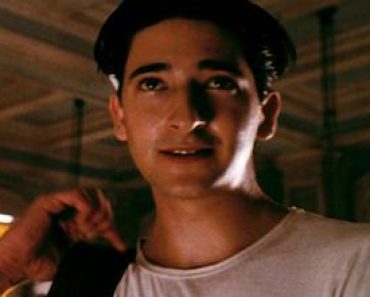
Karen Allen, Spalding Grey, Elizabeth McGovern, and a barely able to shave Adrien Brody all round out the excellent cast with memorable, scene-stealing moments, further underscoring Soderbergh’s inherent gift for casting.
Shot on gorgeous Super 35 film by Elliot Davis and fully utilizing the 2.35:1 widescreen aspect ratio, Soderbergh crafted what’s undoubtedly his prettiest movie to date, a film that he feels is “too pretty,” a comment that can be heard while watching the highly informative interview that’s included on the superlative Criterion Collection Blu-ray platter.
He seems curiously disappointed with himself as a filmmaker in regards to King of the Hill, openly stating that he wished he had shot the film in a more rough and tumble, grittier fashion, which is more in line with his later work and aesthetic.
But I think one of the best things about King of the Hill is how the film is overwhelmingly beautiful at times, evoking a lost, calamitous era, with the juxtaposition of the luscious images bouncing off the hard-scrabble nature and plight of the characters.
The production design is supremely evocative of a long-ago era, forever lost to pictures in books, with period-appropriate cars and clothes filling the frame without ever coming off as precious or ostentatious.
Soderbergh has often been a filmmaker, much like David Fincher, who likes to look back at his work and talk about the problems that he sees and how he’d do things differently if he were to make the movie all over again.
This must be a constant source of mental nagging and anguish for storytellers, as the best of them are always challenging themselves to make their movies better and more artistic.
While I don’t agree with the criticisms that he throws at himself, I can respect him for having the hunger and desire to critically look at his own work from more than two decades ago and contemplate what he’d like to have a chance to redesign or reinterpret.
But in its current form, King of the Hill stands as a serious, important work for Soderbergh as a craftsman, and easily rests as one of his finest, least celebrated efforts.
King of the Hill is available on Blu-ray from The Criterion Collection, and also includes his crafty 1995 feature, The Underneath, as a special feature.
Steven Soderbergh’s King of the Hill review by Nick Clement