
Since the mid-1970s, various groups and individuals have made claims against the legitimacy of the missions to the moon. Public interest in the validity of these conspiracy theories has sustained for over 40 years with more arguments and claims being put forward than ever before.
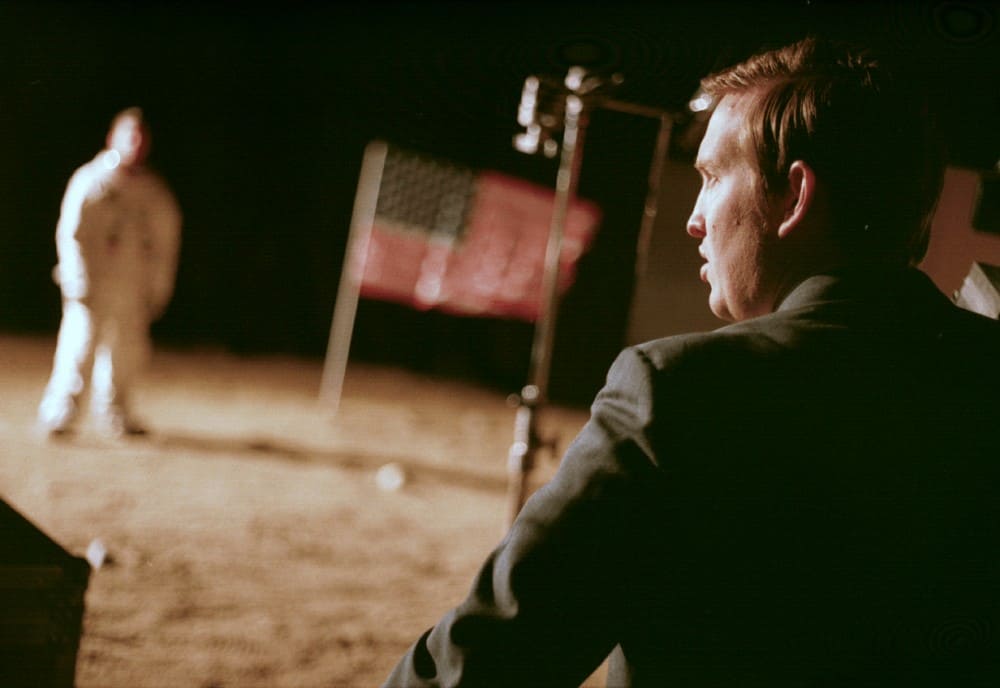
Launching into the action is new sci-fi thriller Operation Avalanche. Set at the height of the Cold War in 1967, we learn that the CIA suspects a Russian mole is lurking inside NASA in an effort to sabotage the Apollo moon-landing program. To combat the threat, the agency send two young agents on an undercover mission – posing as documentary filmmakers capturing NASA’s race to the moon. The agent’s real mission is to use their access and technology to hunt down the possible leak. But the pair soon discovers that their own government may be hiding a secret about Apollo, and the White House will stop at nothing to silence anyone who learns it…
Working with VFX Supervisor Tristan Zerafa (Man Of Steel, X-Men: Days of Future Past) writer, director and star Matt Johnson integrates his characters with original stock footage to blur the lines between fact and fiction. To coincide with the release of Operation Avalanche, we look at five of the strongest conspiracy theories on the moon landing and the counter arguments that go against them… but will we ever know the truth?
Top 5 Moon Landing Conspiracy Theories
1. In the Crosshairs
In some photos of the moon landings, the camera’s crosshairs appear behind objects. Cameras were fitted with a clear glass plate with the crosshairs etched on, making it impossible for any photographed object to appear in front of them. This has been suggested to mean objects have been ‘pasted’ on top.
Possible Explanation:
The obscured camera crosshairs only appear in copied photos of the moon landings and not the originals. The effect is likely caused by overexposure.
2. Starry, Starry Night?
There are no stars in any of the photos. The Apollo 11 astronauts also claimed in a post-mission press conference that they do not remember seeing
any stars.
Possible Explanation:
The astronauts were talking about the lack of star sightings during the lunar daytime. Astronauts regularly sighted stars through the spacecraft navigation optic but all manned landings happened when stars were likely to be out shone by the sun as they are on Earth in daytime. The astronauts could only see stars with the naked eye when they were in the shadow of the Moon. Cameras were also set for daylight exposure and could not detect stars.
3. The Fluttering Flag
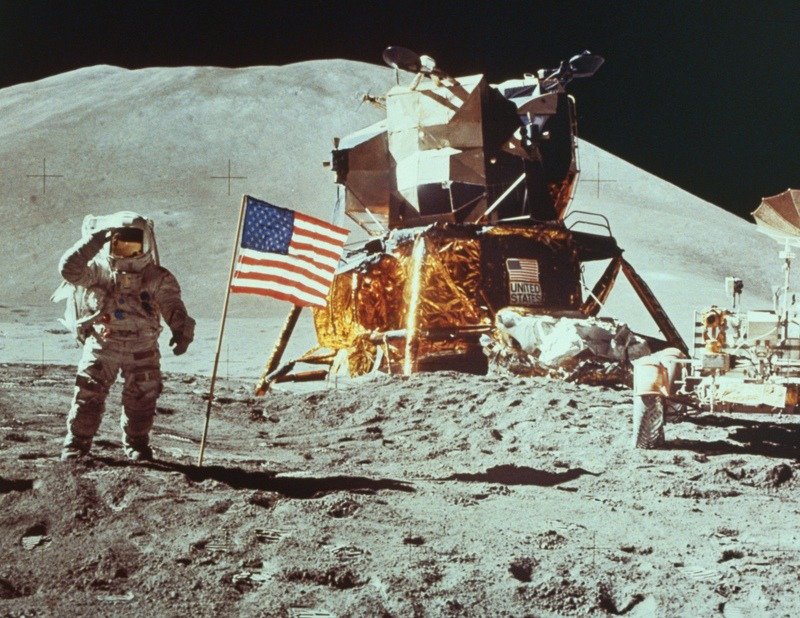
The flag placed on the surface by the astronauts fluttered despite there being no wind on the Moon. This suggests that it was filmed outside on Earth or a wind effect was used to cause the flag to flutter.
Possible Explanation:
The US flag was fastened to an R-shaped rod so that it didn’t hang down. The flag only seemed to flutter when the astronauts were moving it into position. The flag was rippled because it had been folded during storage and the ripples could be mistaken for representing ‘movement’ in a still photo. Videos show that when the astronauts let go of the flagpole it vibrates briefly but then remains still.
4. Light As a Feather
The Lunar Modules weighed 17 tons and seem to make no mark on the moon surface dust, yet footprints can be seen beside them.
Possible Explanation:
The astronauts were much lighter than the lander, but their boots were much smaller than the lander’s footpads. Force per unit area rather than mass determines the amount a surface is compressed. Also, it could be seen in some photos that the module footpads did press into the surface, especially when they moved sideways at touchdown.
5. Shifting Shadows
The angle and colour of shadows are inconsistent, the suggestion being that artificial lights and studios were used but not always carefully.
Possible Explanation:
Shadows on the Moon are complicated by reflected light, uneven ground, wide-angle lens distortion and lunar dust. There are several light sources including: the Sun; reflected light from Earth; the Moon’s surface; the astronauts; and the Lunar Module. Light from these sources is scattered by lunar dust in many directions, including into shadows. Also, shadows falling into craters and hills may appear longer, shorter and distorted. All these variables help to explain why the shape and colour of the shadows might appear irregular.
Wherever you stand on the theories surrounding the moon landing, Operation Avalanche promises to be a highly entertaining exploration into the paranoia of The Cold War period and the potential of technology at that time.
Lionsgate UK Releases Operation Avalanche on Digital Download 6th March and DVD 20th March, 2017
Pre Order from Amazon today: https://amzn.eu/4678rRG