

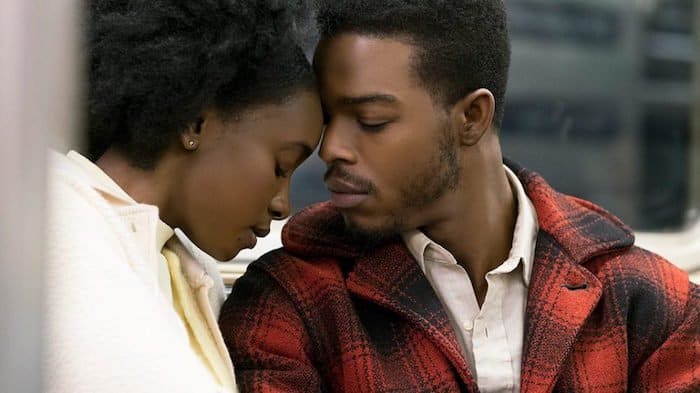
If Beale Street Could Talk, which serves as Barry Jenkins’ confident follow-up to his Oscar winning Moonlight, is a bittersweet romantic drama that further underscores the racial divide in America, whether it be from decades previous, or right now in the moment.
The film takes a perceptive (and saddening) look at how race defines everything in America, and how an entire segment of the population has never been given a full chance in the way that many others have been allowed. And if the film, as an entire piece of dramatic cinema, didn’t move me in the way his previous picture did, Jenkins has established himself as a major voice in American cinema.
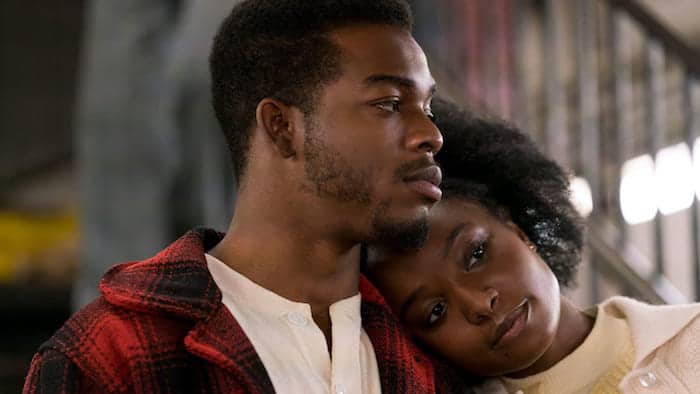
More traditional and straightforward than Moonlight but no less thematically rich and thoughtfully considered, Jenkins continues to demonstrate a striking visual sensibility as a filmmaker, re-teaming with bold cinematographer James Laxton, and conjuring up some velvety and absolutely beautiful images to match the heartfelt narrative which Jenkins adapted from James Baldwin’s celebrated novel from 1974.
One sequence in particular, with a swirling camera and expressive lighting, is a show-stopper, and in general, I love how Jenkins seems obsessed by people’s faces, and how eyes can communicate more than words ever can.

Set in Harlem during the early 70’s, the story hinges on two young African-American lovers who have been dealt a tough hand – she’s pregnant with their baby and he’s been wrongly imprisoned for rape.
Not a promising scenario by any measure. Both KiKi Layne and Stephan James did splendid work in the leading roles, conveying unbridled love and genuine heartache, and if the narrative paints itself into an inevitable corner, nothing is taken away in terms of the overall level of passion that everyone brought to the project.
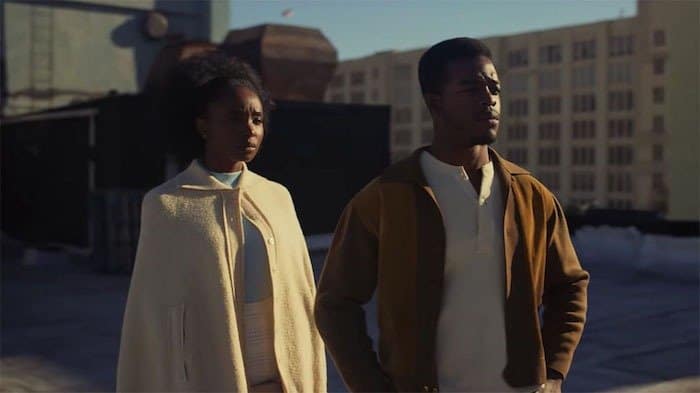
There’s a flat-lined sense of dramatic flow that settles into the story (after one explosive bit in the opening act and a “big” scene towards the end) which kept the film from soaring to certain peaks I’d expected to reach. But one of the subtle things about If Beale Street Could Talk is how it’s all about “experiences.” And because it’s told through the African-American view point during the early 70’s, everything is different.
The things that many people would take for granted become a massive obstacle for the characters (finding an apartment, jobs, credibility with law enforcement) and that’s key to understanding the thrust of the film.
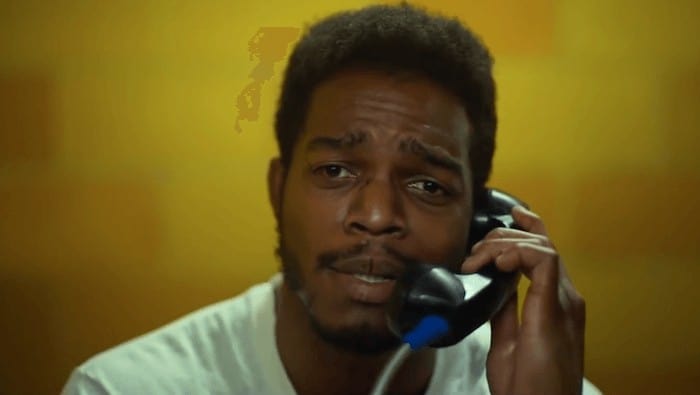
Jenkins has clearly found a particular manner in which to tell his stories, and I noticed some visual references (whether conscious or not) to Spike Lee’s work, taking a confrontational stance to how information is delivered.
When characters look directly into the camera lens, it can be distracting if not properly handled; the way Jenkins uses this tactic is sublime, as if his subjects are looking into your soul for answers to questions that can’t be explained.
Review by Nick Clement
Summary
Nicholas Britell’s swooning and melancholy musical score is a major highlight, ensconcing the film with a specific sense of hopeful purpose and lived-in feeling, while everyone in the supporting cast delivered vivid performances,