
In the literary world (where consistent female readers far outnumber men), there’s a huge, healthy sub-genre of pulpy domestic thrillers in which women grapple with men in their lives potentially gaslighting them. It’s fertile narrative territory because it both cannily plays to the suspicions (and in some cases lived experiences) of its core audience, but also offers up all types of different avenues for artistic explorations both high and low.
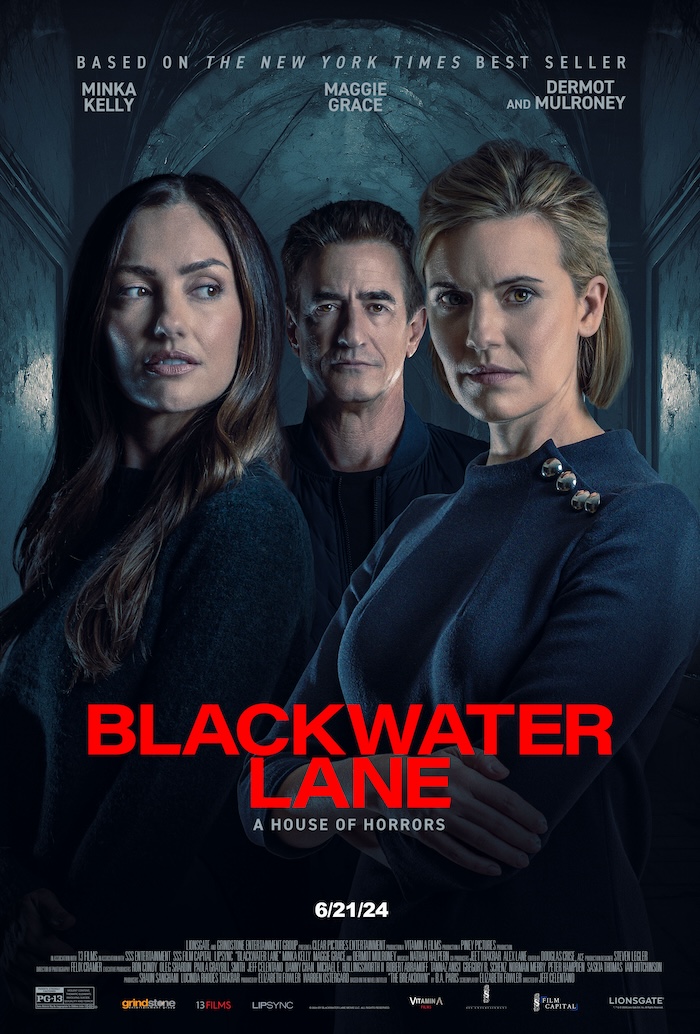
An adaptation of one such tome arrives in the form of the England-set psychological thriller Blackwater Lane, which flirts a bit with supernatural elements before settling into a groove that, if not particularly incredibly differentiated or elevated, generally works fine enough as a vehicle for the fetching Minka Kelly, as well as undemanding fans of this sort of entertainment.
The movie opens with an aerial view of a sprawling countryside mansion and winding camerawork that then gives viewers a tour of its interiors. This occurs under voiceover narration (“My favorite time of year is when summer finally gives way to autumn, and falling leaves remind us that the only constant is change… so trust the journey, both good and bad”) that not so subtly cues its audience to prepare for a redemptive tale of feminine triumph and mental health healing.
Kelly (Friday Night Lights) stars as Cass Anderson, a teacher at a tony private school whose life starts to unravel after, late one night while returning home, she passes by an auto accident scene that, she learns the next morning, is connected to a death. The event worries her husband Matthew (Dermot Mulroney), especially after Cass and her friend Rachel (Maggie Grace) later discover that they knew the woman who passed away.
Soon, more unsettling things start happening. Against the backdrop of vague incidents (phone calls with static) and a litany of jump-scare deployment (ominous shadows, rattling doorknobs, bathtub visions, and stumbling into rooms where sheet plastic blows over one’s face), a list of loose, seemingly unconnected mysteries unfolds: incongruities in a security system contract at Cass and Matthew’s home; the dead woman’s potential relationship with a friend or co-worker; and a police investigation led by PC Lawson (Natalie Simpson) into the car accident.
Viewers also receive small hints of a past mental health crisis, in the form of a nervous breakdown and hospitalization, plus a history of early-onset dementia in Cass’ family.
Blackwater Lane is adapted by screenwriter Elizabeth Fowler from the 2017 novel The Breakdown, by B.A. Paris. Befitting its novelistic roots, the movie features enough characters here to hold one’s attention. These include Cass’ dashing co-worker John (Alan Calton), with whom she is quite friendly; a 15-year-old student, Andrew (Judah Cousin), who seems somewhat infatuated with his teacher; and the dead woman’s husband, Alex (Kris Johnson), who pops up in a couple scenes.
As rendered here, though, some of these strands (especially the latter) seem like a case of poorly conceived “tweener” red herrings, and come across as a waste of screen time. Either the investigatory thread in which Cass tries to get to the bottom of this woman’s death needs to be a bit more sharply drawn, or winnowed down in favor of greater detail on her potential mental unravelling.
A couple other groaners surely from the book also slip through, too. One example comes in the form of over-cranked bad vibes from a creepy alarm system repairman who shows up unannounced and says to Cass things like, “Don’t worry, I’ve already got a copy of your layout,” and “Murder’s good for business, know what I mean?” In what world would a salesman talk like this? The answer: a movie world intent on nothing more than very obviously losing viewers.
Blackwater Lane director Jeff Celentano (The Hill, Glass Jaw) and editor Douglas Crise maybe aren’t done any favors by the multi-pronged demands of the material (or at least its screen adaptation), and struggle to establish and maintain a cresting narrative momentum. Cinematographer Felix Cramer makes good use of the movie’s exterior locations to give it some production value, but otherwise struggles a bit to come up with a unifying or engaging visual palette. The film is fairly flatly shot, and even its deployment of some familiar portentous genre markers (a crow flying into a window, a fox lurking on the Anderson’s grounds) doesn’t much quicken one’s pulse.
If, as scripted, the character of Cass could use a bit more fragility and sense of well-articulated imperilment to help drive the story forward, Kelly’s back-foot, less-is-more approach to her performance is actually quite good.
There’s a soft lilt she gives to the inflection of her character’s dialogue, perhaps connecting to some of her own real-life adolescent turbulence, as detailed in last year’s memoir Tell Me Everything.
Our Rating
Summary
That quality of Kelly’s performance, which counterbalances some of the obviousness and familiarity of the narrative itself, is what most recommends Blackwater Lane. As a domestic thriller or portrait of mental unspooling, the movie will win no awards, it’s true. But it reminds one that, just as in real life, sometimes there are rewards in even the quotidian.