Stranger Things is one of Netflix’s major success stories becoming a global phenomenon basically overnight so let’s dive into just how Stranger Things brand deals built a global powerhouse.

With season 3 garnering over 40m household views in the first four days of release the show has kickstarted the careers of all the child actors involved and this meteoric rise is largely down to timely marketing and PR strategies on top of a well-crafted story and wonderful actors.
Diving straight into the 80s aesthetic of the show and packaging it correctly the marketing team helped boost the show’s popularity far beyond on-screen hype.
Print and branding experts at Solopress have taken a look at how Stranger Things’ marketing has helped the show become ubiquitous in modern pop culture.
Stranger Things On-Screen
Set in the fictional Indiana town of Hawkins in the 1980s, Stranger Things follows a group of kids who investigate supernatural happenings linked to the disappearance of their friend.
What separates the show from the plethora of other ‘kids-vs-aliens’ films is the immersive 1980s experience created; from the period soundtrack to the set design, props and locations, the show’s attention to detail is hugely endearing to fans.
As a result, Stranger Things’ wildly-successful marketing campaigns have tended to tap into the nostalgia factor, which is equally important to the show’s on-screen aesthetic and commercial success.
Stranger Things Brand Deals – Collaborations
Littered with pop culture references there are items and products within the show that are inherently 80s, Eggo waffles and walkie-talkies just to name two!
Netflix Head of Global Partner Marketing, Barry Smyth, commented: ‘Netflix is an internet company, so associating its shows with physical products helps customers think about its shows even when offline.’
The show formed promotional partnerships with 75 different brands for season 3, brand collaborations are a key aspect of how Netflix has grown the Stranger Things brand, and special editions of much-loved products has helped sustain the buzz around the show in between seasons.
Coca-Cola
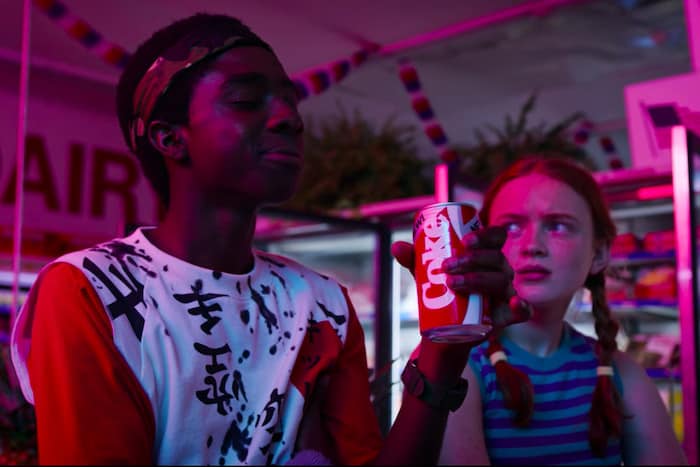
Coca-Cola’s ill-fated ‘new Coke,’ introduced with a new formula in 1985 to huge backlash, features in the series as characters debate whether the new or old flavour is superior.
An 80s-themed pop-up collaboration with Coca-Cola followed, as they (sheepishly) admitted that it may have been a mistake to change the Coke recipe.
At the pop-up, visitors were given limited edition Coke Zero cans and played classic arcade games like Space Invaders, highlighting the importance of nostalgia in influencing Stranger Things’ brand partnerships.
Coke became the most-mentioned brand name in conjunction with the series, with almost 56,000 social media posts referring to both Coca-Cola and Stranger Things in the run-up to the series release.
Nike
A collaboration with Nike followed as members of the public picked up on the footwear on show throughout Stranger Things. The cast, sporting vintage Reebok Classics and popular 80s Nike models like the Cortez and Tailwind, helped drive demand for a limited-edition run of Nikes sporting Hawkins High School insignia.
Here, Netflix’s smart use of product placement in the series helped drive further interest in retro Nike silhouettes, before then offering exclusive colourways and details linked to their own offering – Stranger Things.
The capsule collection was released in the weeks leading up to series 3, which launched on July 4. Between May 9 and July 8, Nike received $178m of earned media coverage, indicating the widespread success of their collaboration.
Mongoose
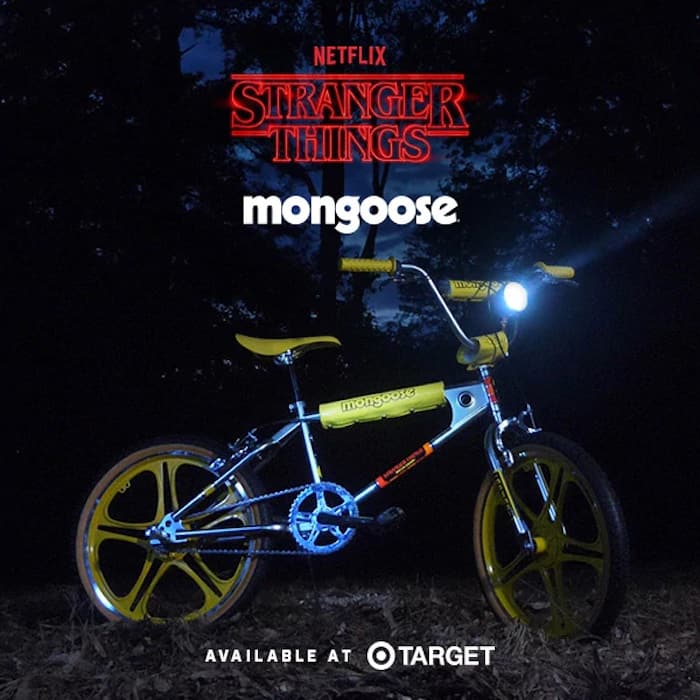
The show also collaborated with Mongoose bikes to release a special-edition replica of one of the bikes ridden by ‘Mad’ Max Mayfield in the show.
Complete with show-inspired details such as stunt pegs and headlamps, as well as bright yellow 5-spoke alloy wheels, the bike is set apart from normal Mongoose bikes by its 80s detailing.
Whilst this collaboration was not as high-profile as the show’s other brand partnerships, it’s worth the mention due to how quintessentially 80s this product is.
The chrome frame, alloy wheels and headlamp provide little benefit other than aesthetically, but, as many of Stranger Things’ partnerships have shown, brands who celebrated their heyday in the 80s are perfect to package and sell the nostalgia created on-screen.
Burger King
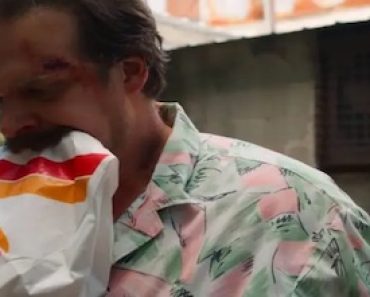
Burger King made an appearance in five of the season’s eight episodes – it was seen multiple times during the gang’s trips to the Starcourt Mall, but also featured as a takeaway in episode six, for an estimated product placement advertising value of $471,000. The fast-food giant was therefore a perfect brand partner for a cross-promotional deal.
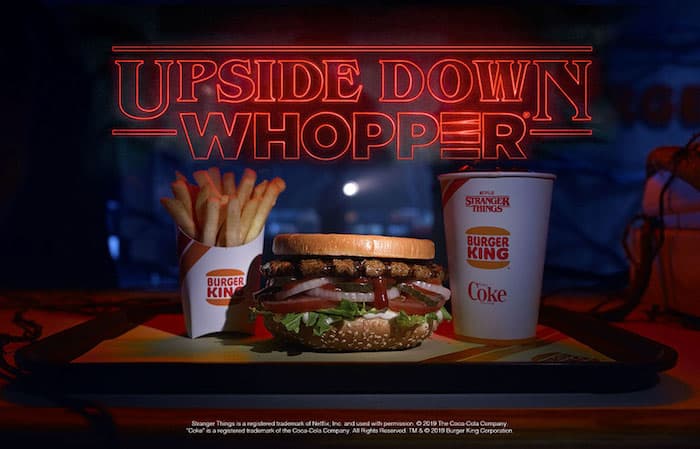
The burger chain released an ‘Upside-Down Whopper,’ referencing the Upside-Down, the parallel universe in Stranger Things where supernatural happenings occur.
The limited-edition burger was simply a normal whopper with the top and bottom buns switched around, though it did come in packaging reminiscent of BK’s 1980s packaging.
If anything sums up how succinctly Stranger Things has managed to package and sell nostalgia, this is it.
With Stranger Things, Netflix has recreated the 1980s through a consumerist lens, inviting nostalgic viewers to relive a taste of life 40 years ago. For those who didn’t live through the 80s, Stranger Things’ brand partnerships give viewers a chance to get a little closer to the immersive atmosphere created in the show.
The Stranger Things experience is therefore a great example of how online content providers have used physical products and branding to boost their real-world cultural relevance.
Solopress Head of Marketing, Glen Eckett, commented on the Stranger Things brand deals: ‘Stranger Things has created an on-screen world and marketed it perfectly through mutually-beneficial collaborations with established brands. The show has harnessed the power of nostalgia massively, and that’s allowed it to sustain a buzz between series.’