
The Game is my FAVORITE film by David Fincher. I’m not saying it’s his BEST (between Seven and Zodiac I’m still undecided), but make no mistake, the one I keep coming back to the most over the years is this underrated 1997 effort, which coming two years after Seven, seemed like the next logical step for this dark magician of the cinematic arts. Released to mixed reviews (with ardent supporters) and indifferent box-office (just under $50 million domestic), it’s a film that was ahead of its time, both aesthetically and narratively, offering one of the sleekest overall visions of nighttime paranoia ever crafted (it seriously looks like it was shot yesterday!), while showcasing a mentally twisted and ever-shifting narrative complete with a whammy of an ending that has remained one of the most divisive movie moments in the history of the medium. Yes…the history of the medium. I’m going there. Anytime you bring up The Game in conversation, the chat inevitably tends to drift towards that mind-fuck of an ending, and while some love to complain about the implausibility of it, that’s the whole genius part of the entire endeavor – it’s a film that LOVES its own impossibility, and while vigorously contrived in every conceivable way, it’s been done for its own maximum impact when put into context with the bigger picture.

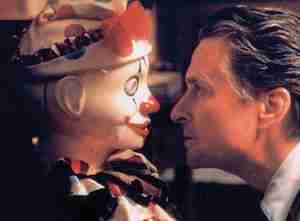
It can’t be denied that the bitter social commentary that runs throughout the entire picture is equally matched by the Hitchcockian level of glee that Fincher had with running his mega-star (Michael Douglas, in one of his absolute best performances, as the amazingly named Nicholas Van Orton) through the emotional and physical gauntlet. Sean Penn is shifty and sweaty and devious in a supporting role as Douglas’s brother (a part originally intended for Jodie Foster), who gives his big bro the ultimate birthday present – a gift certificate to a mysterious company called CRS, short for Consumer Recreation Services. After a darkly hilarious encounter with a CRS representative (the late James Rebhorn, master scene stealer), Van Orton’s “game” begins. Or…did his game “begin” the moment the film started? And what’s with Deborah Kara Unger and all these sketchy people popping up? And why won’t my briefcase open and why can’t I access my credit cards and why am I being shot at? And by the end of the film, is it even over?
If I am being coy with describing the plot, well, that’s by design, because while the film has definitely picked up a rabid cult following over the last 18 years, there are still plenty of people out there who might not be familiar with this utterly perverse, wickedly entertaining film. I’ve literally seen this movie at least 100 times; no exaggeration. It used to run on a loop during the college years, it would play as background noise as I’d be writing term papers, and after two theatrical viewings back when I was 17 years old, I immediately knew it was going to be an important film for me for years to come.
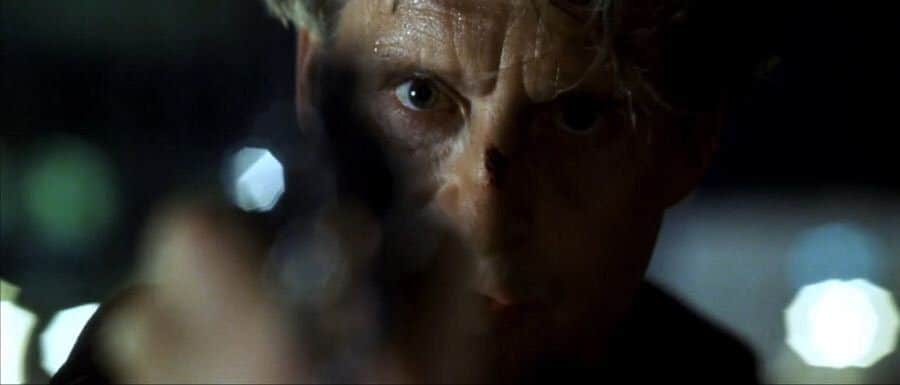
There’s something so sinister, so Parallax View-y about John Brancato and Michael Ferris’s script that I just adore, and I’ve become obsessed with studying the edges of the frame on recent viewings, looking for more clues that I’ve still yet to discover. On the technical side, the film is remarkable, with Harris Savides’ remarkable nocturnally dominated cinematography sets an ominous tone right from the start, with slippery camera movements and perfect compositional choices. James Haygood’s faultless and beyond crisp editing keeps the pace riveting and tight all throughout which gives the entire film an immaculate quality, while the thoroughly eerie score from Howard Shore envelopes the images with creepy delight.
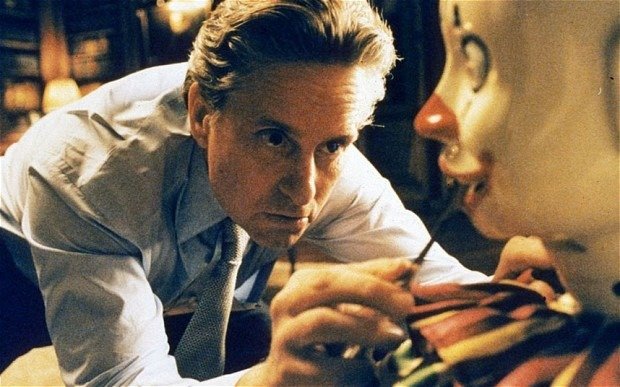
And who can forget the use of Jefferson Airplane’s immortal White Rabbit being blared on the soundtrack when Douglas comes back to his staggering mansion (Jeffrey Beecroft’s astute and moneyed production design is rich with texture) to find it decorated in glow in the dark spray paint graffiti lit by black-light? And again, there’s that ending, which I have to say, has got to be one of the most challenging finishes, both mentally and thematically, to any movie that I’ve ever come across. The Game can be seen as so many things – a film that denounces suicide, a film that is honoring Hitchcock, a film that satirizes and scolds the confident and controlled business class that runs our major cities, a film that holds a mirror up to our fears and anxieties while constantly picking at what bothers and frustrates us the most.
The Game has long been one of my absolute favorite pieces of cinema, and that will likely never change. It’s a movie that has provoked constant debate and passionate discussion all throughout the years, and it’s one that I look forward to revisiting for years to come, as there are rarely films this watchable, this visually stimulating, and this thought provoking all in one heady package. The Game is available on Blu-ray via The Criterion Collection.
Check out our other David Fincher reviews this week:
Alien 3 Review – CLICK HERE
The Girl with the Dragon Tattoo – CLICK HERE
The Social Network – CLICK HERE
The Curious Case of Benjamin Button – CLICK HERE
Review by Nick Clement
-
The Game
Summary
it’s a film that was ahead of its time, both aesthetically and narratively, offering one of the sleekest overall visions of nighttime paranoia ever crafted