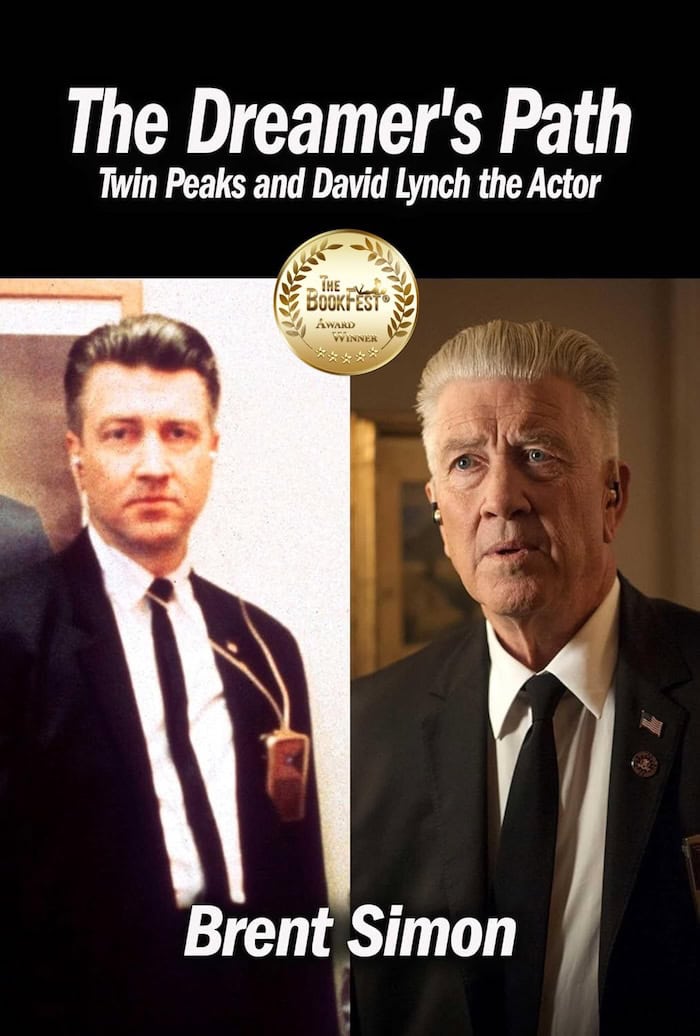
There are many books written about David Lynch, the acclaimed director behind Eraserhead, Blue Velvet, Mulholland Drive, Wild at Heart, The Elephant Man and numerous other films. But I can safely say that my book, The Dreamer’s Path: Twin Peaks and David Lynch the Actor, is truly unlike any other.
That’s because Lynch, in addition to being a filmmaker, began his life as a fine artist, and was a lifelong painter. He made music. He crafted lamps and even some of his own furniture. And, yes, he was an actor — a somewhat occasional actor, true, but one whose onscreen performances spanned six different decades and resulted in a surprisingly robust filmography. Those credits included everything from appearances in some of his own work to left-field cameos in projects from Steven Spielberg and Louis C.K. So what was it about acting that was of sustained interest to Lynch?
The answer to that question stretches back to the initial inspiration for The Dreamer’s Path. I could write 100,000 words (and very well may have over the course of my professional life) on what Twin Peaks means to me. The show, co-created by Lynch and Hill Street Blues writer Mark Frost, debuted in the United States on ABC in April 1990, and in Great Britain on BBC2 in October of that same year. Right out of the gate, it was a huge, globe-straddling pop cultural hit. At the height of its obsessive pull, fans included everyone from former President of the Soviet Union Mikhail Gorbachev to Queen Elizabeth II herself.
Its narrative hook was that of a murder mystery, but it was also shot through with lots of humor, as well as dread. In short, it gave the impression of being beamed in from a world beyond the stars — a world containing multitudes, yes, but also, despite its reputation for “weirdness,” innate truths. Some of these larger truths seemed like things actively withheld by adults from kids (“There’s a sort of evil out there… a darkness, a presence,” as one character would say), but others felt born of and connected to more mystical realms. Things difficult to articulate but powerfully sensed. It’s no wonder that the series connected so enormously with creative-minded young people, many of whom would go on to carve their own paths through various artistic fields.
Apart from being caught up in the characters and stories, however (and to me there was always more than just who killed Laura Palmer, its murdered small town homecoming queen), Twin Peaks left me wanting to unpack the complexity of feeling attached to such deftly juggled tonalities. How could I laugh at something unnerving, or be so moved by things that gave off a feeling of such profound uncanniness?
In its second season, Twin Peaks would face myriad pressures regarding the resolution of its central mystery, and other challenges. Its schedule would get juggled, and the show would eventually be canceled and leave television in mid-1991. A film, Twin Peaks: Fire Walk With Me, was released in 1992, and while it teased a few things regarding the series-ending cliffhanger, it was chiefly a prequel, recapping the last seven days of Laura Palmer’s life, and a related murder from one year earlier. Ahead of its time, it was met with commercial indifference and a great deal of critical confusion.
The idea for The Dreamer’s Path was born in large measure from my enduring love for Twin Peaks and in particular the way it incorporated and addressed the passage of time between its initial, popular television incarnation (in which the character of Laura Palmer says “I’ll see you again in 25 years”) and its third season, also known as “The Return,” in 2017. The expanded prominence of David Lynch’s character of Gordon Cole was, to me, especially fascinating. While I don’t by any means think it’s a skeleton key to unlock or “solve” all the mysteries of Twin Peaks, it did seem very important — this act of Lynch, a quarter-century later, stepping back in a very physical way into this immersive world he’d cocreated, the world of his greatest mainstream success. As Cole himself might say: “Now this is really something interesting to think about.”
As I kicked the idea around in my head, my thoughts drifted back to Zelly and Me, Tina Rathborne’s 1988 coming-of-age drama, which predated Twin Peaks and featured Lynch in a supporting role opposite his partner at the time, Isabella Rossellini. I thought, too, about Lynch’s work for his website (and, later, YouTube channel), plus various voice cameos that reliably enjoy cyclical viral moments when younger Lynch admirers discover them and various fandoms collide. The manner in which he came to lean into performance seemed interesting — certainly something worth exploring.
After all, when Lynch passed away in January 2025, his death was met online with an outpouring of grief and a celebration of his work and imagination that seemed in many ways to dwarf his cultural standing. Lynch’s last film had been the heavily experimental psychological horror drama Inland Empire, released in 2006. For an entire generation, there was no credibly firsthand-experienced theatrical reference point of Lynch as a cinematic auteur. Rather, he was an idiosyncratic artist known for his lovably curmudgeonly feelings about watching movies on your smartphone, his voicework as the lovably eccentric bartender Gus in the Family Guy spinoff The Cleveland Show, and/or his lovably curmudgeonly advice as John Ford in Spielberg’s The Fabelmans. So how did many young people view Lynch and first come to his work, and how did his acting intersect with this relationship?
My work on The Dreamer’s Path, which began over a year prior to Lynch’s death, came to encompass more than 70 interviews with those who were in a position to know him best — longtime collaborators, lifelong friends, family members, and a core group of dedicated former assistants. Relevant material from some of my own numerous interviews with Lynch spanning more than 20 years also made its way into the book, informing its analysis and commemoration of his work.
Among the many, many revelations of The Dreamer’s Path, in addition to all sorts of other Twin Peaks anecdotes:
– Did Lynch actually film cameos for his movies The Elephant Man and Lost Highway?
– The full, behind-the-scenes story of the 2017 short film in which Lynch appeared with Johnny Depp, Laura Dern and J.K. Simmons.
– The character who Lynch was actually set to voice on The Cleveland Show prior to Gus the Bartender.
– Seth Green talking about the very unlikely other candidate Lynch beat out for his voice cameo as the Mad Scientist in Robot Chicken.
– All the details that led to Lynch somehow appearing in two Brazilian short films in 2009.
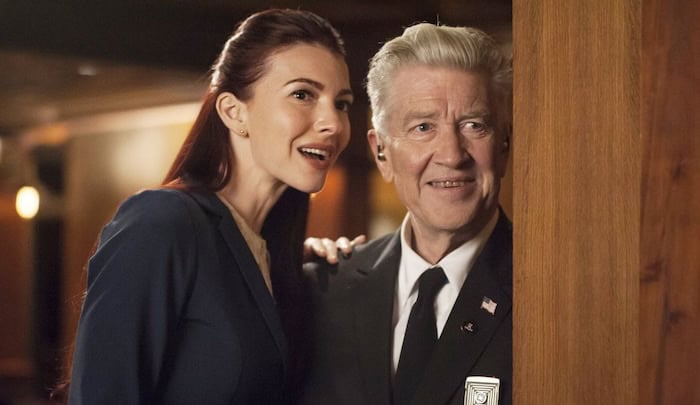
– The full story about the hotly debated story arc involving Lynch’s Gordon Cole kissing Shelly Johnson (Mädchen Amick) in Twin Peaks’ second season.
– Lynch’s two video projects in which he voiced a disembodied Barbie doll head… and his response to a cease-and-desist letter from Mattel’s lawyers.
– Lynch’s very private connection, straight from daughter Jennifer Lynch, to the iconic “Fix Your Hearts or Die” line from the third season of Twin Peaks.
– Details of Lynch posing outdoors with a cow on Hollywood Boulevard on November 15, 2006, touting Laura Dern’s work in Inland Empire.
– The full, behind-the-scenes story of Lynch’s appearance opposite good friend Harry Dean Stanton in 2017’s Lucky.
– Louis C.K. talking in detail about wooing Lynch for his memorable two-episode cameo in 2012’s Louie.
– Information on dozens of exclusive short videos Lynch made and starred in for various film festivals, honorifics, and other gatherings.
– The full, behind-the-scenes story of the the under-appreciated Zelly and Me, as well as Lynch’s shocking reaction to first seeing the film, as recounted by Tina Rathborne and Isabella Rossellini.
– The answer to the ultimate Lynch trivia question stumper, involving a newly uncovered Russian arthouse film in which he appeared.
If any of this sounds of interest, I’d be delighted and honored if you checked out The Dreamer’s Path: Twin Peaks and David Lynch the Actor, which you can purchase easily online, either via Amazon or the publisher’s website.
Article written by Back to the Movies contributor Brett Simon.